How to Avoid Seasickness on a Catamaran Charter

No question comes up more often at the wharf than this one: what if I get seasick? It stops perfectly capable adults from booking a day on the water, and it really doesn't need to. Motion sickness is predictable, preventable and, on the right boat with the right preparation, genuinely rare. This guide collects the seasickness tips boat charter skippers hand every nervous guest at the wharf, then walks through a full charter day hour by hour so you can see exactly where the smooth water is. If you're still comparing boats, start with our complete guide to catamaran hire on Sydney Harbour.
Why a catamaran charter is the steadiest place to start
Motion sickness happens when your inner ear registers movement your eyes can't confirm. The faster and more erratic the movement, the harder your brain has to work. That makes your choice of boat the single biggest decision you'll make, and it's why we run our charters on catamarans.
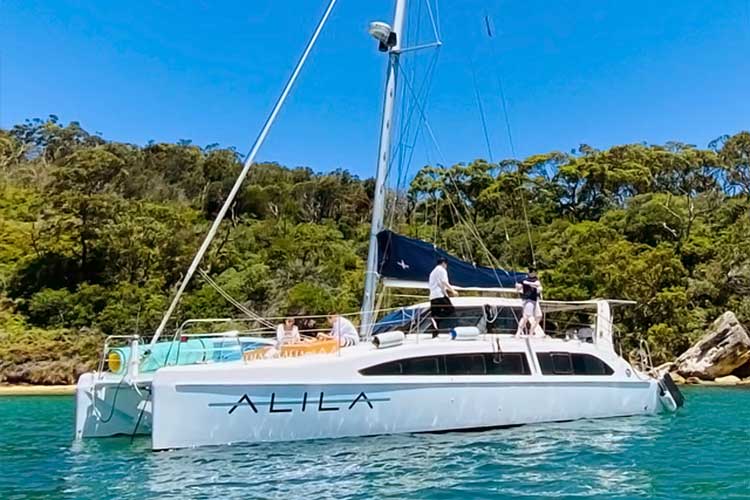
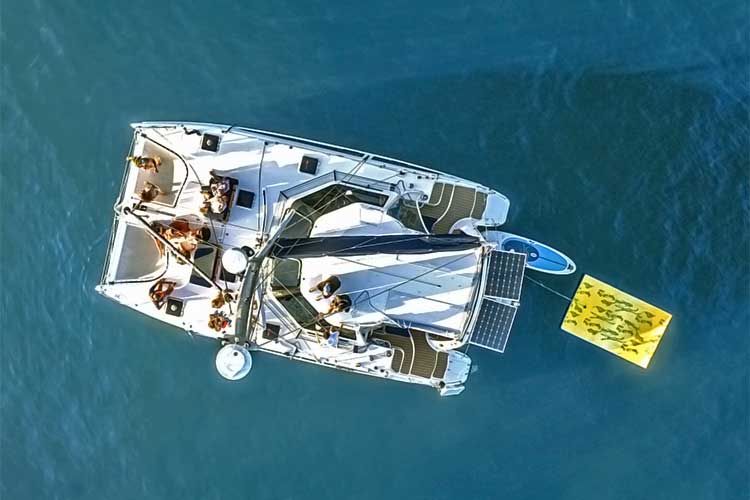
A catamaran's twin hulls give it a wide, flat stance on the water. Where a monohull sailboat tilts and sways, a catamaran stays level as it moves. Our flagship Alila catamaran has a netted trampoline and a wide lounge deck, so guests sit out in the fresh air with a clear view of the horizon instead of tucked in a cabin, where symptoms build fastest.
There's a second advantage that matters even more. A private charter spends most of its day at anchor in a sheltered cove, and anchored, the boat barely moves on a normal Sydney day. A ticketed harbour cruise runs a fixed loop come chop or calm, packed and often screened off from the breeze. A charter also gives you something no scheduled boat offers: a skipper who will change course to find smoother water the moment anyone on board feels off.
Seasickness tips before you board your boat charter
Almost everything that decides how you'll feel on the water happens before you step aboard. Do these and you've stacked the odds hard in your favour.
- Sleep the night before. Tired bodies are far more susceptible to motion sickness. Don't spend the eve of your charter at a late-night function.
- Eat a light, plain meal two to three hours out. Toast, banana, rice, yoghurt. Skip the greasy big breakfast — an empty stomach is nearly as bad as a heavy one.
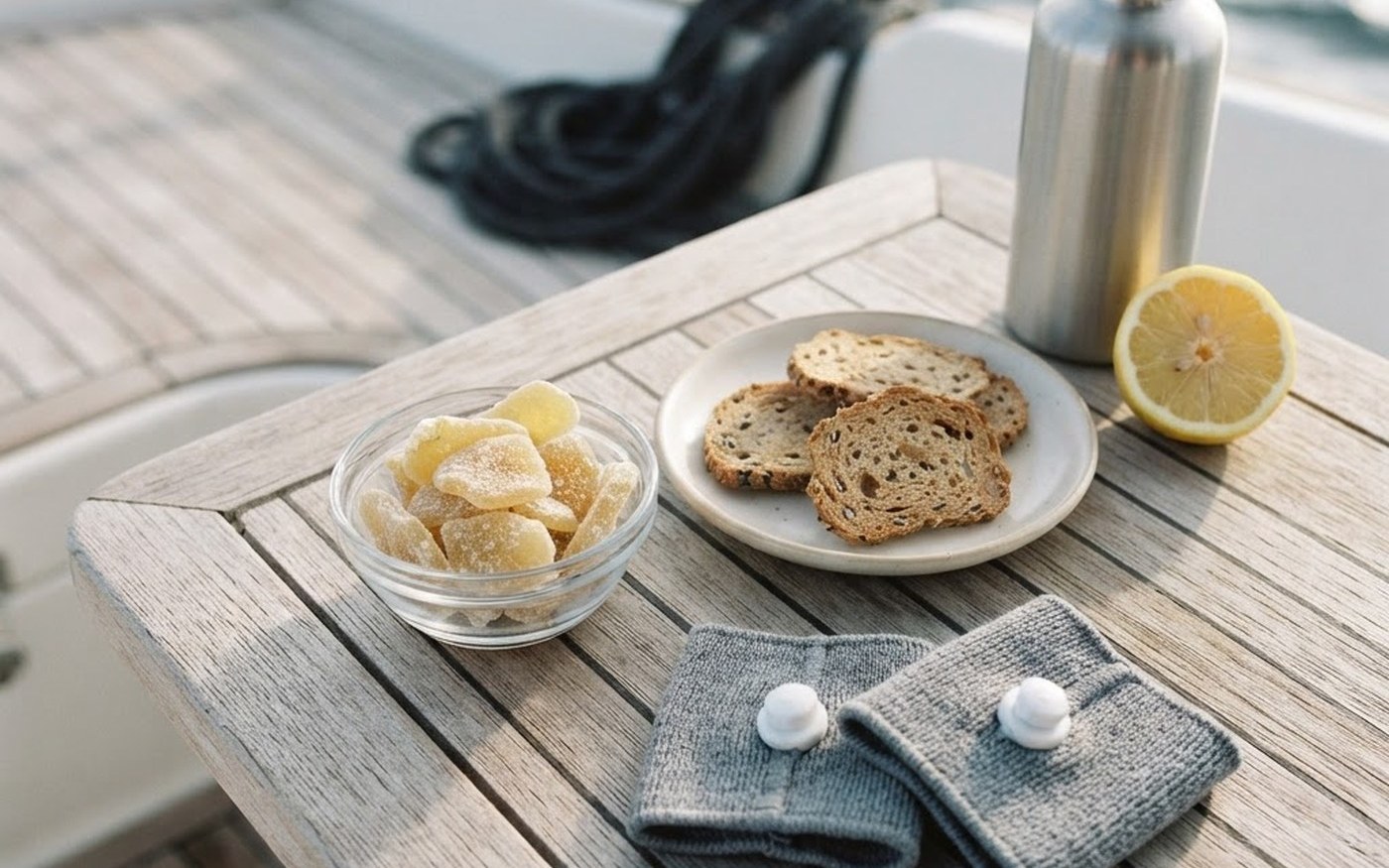
- Take ginger 30 to 60 minutes before boarding. Crystallised ginger, tea or capsules all work; it needs to be in your system before the motion starts, not after.
- Tablets? Take them early. They prevent nausea far better than they cure it. Ask a pharmacist about non-drowsy options and take them before departure, not during.
- Put acupressure wristbands on before the boat leaves the wharf. They press the P6 point at the inner wrist and cost a few dollars.
- Hydrate from the morning and go easy on alcohol the night before — hangover plus swell is a losing combination.
- Book a morning departure. Sydney Harbour is at its calmest before the afternoon sea breeze fills in.
Your hour-by-hour seasickness-free charter itinerary
Here's how a typical five-hour private charter unfolds, with the seasickness tips timed to each moment rather than dumped in a list you'll forget by the wharf.
Meet your skipper at the wharf
Start calm: water bottle in hand, wristbands on, ginger already taken. Mention that a couple of the group are prone to seasickness. No skipper is ever surprised to hear it, and knowing lets them plan the route around sheltered shores.
Boarding: pick your spot wisely
Choose seats near the middle of the boat, close to the waterline, facing forward — that's where you feel the least pitch and roll. Stay out on the open deck in the fresh air rather than heading below.
Departure: eyes on the horizon
The first ten minutes of motion are when your body calibrates. Look at the far horizon — the Opera House, the Harbour Bridge, the heads — and let your eyes confirm what your ears are reporting. This is not the moment to read or scroll.
Steady progress toward a sheltered cove
Most guests settle within twenty minutes. Nibble dry crackers, sip cold water, and stay fixed on the horizon if you're still finding your sea legs. If anyone feels queasy, tell the skipper now — a small course change toward flatter water works beautifully at this stage.
Anchor down: the motion stops
The engine cuts and the boat settles flat, and this is where seasickness ends for almost everyone. At anchor in a sheltered cove the motion is close to zero. Guests who worried all week are usually first onto the trampoline or down the swim ladder — add a snorkelling stop, because you can't be seasick while you're floating in the water.
Long lunch at anchor
With the boat still, lunch is easy grazing: platters, fruit, cold drinks. Keep portions moderate anyway — a very full stomach plus any swell later in the day can bring symptoms back. Our catering and BYO options make a light, fresh menu simple.
The homeward leg
By now almost everyone has their sea legs. Stay on deck as the boat picks its way back past the headlands for one last look at the skyline. Guests who took the pre-boarding steps rarely give the trip home a second thought.
A few of these habits deserve pinning to your fridge door:
October–November weather note: spring afternoons on Sydney Harbour regularly whip up a sea breeze that churns the main channel into whitecaps by mid-afternoon. Your skipper will anchor in a sheltered cove and orient the boat to the swell, and mornings stay calm. It's also the start of the Christmas party season, when weekend charter slots book out early — reserve your date sooner rather than later.
If nausea creeps in mid-charter, what actually works
Even well-prepared guests have an off day. The moment you feel the first flutter — cold sweat, sudden yawning, food aversion — act immediately rather than toughing it out. Move amidships, low and facing forward, and lock your eyes on the horizon. Get fresh air; go up on the trampoline rather than down into the cabin, where smells and enclosed motion stack up fast.
Sip cold water and nibble something dry and plain. Acupressure helps at any time, and lying back with your eyes closed removes the sensory mismatch that started the problem. Tell your skipper straight away — re-orienting the boat to the swell or shifting to a flatter anchorage fixes it most days, and crews would much rather adjust course than have you quietly suffer.
The most reliable seasickness remedy on Sydney Harbour is a wide, stable catamaran sitting flat at anchor in a sheltered cove.
ESH Charter GuideReady for a smooth, seasickness-free day on the water?
Private, skippered catamaran charters on Sydney Harbour from $325 an hour. Tell your skipper you'd like the calm-water plan and they'll build the whole day around sheltered coves and smooth sailing.
Frequently Asked Questions
Will I get seasick on a catamaran charter?
Most guests don't, and nervous ones usually feel fine within the first half hour. Catamarans heel far less than monohulls, most of the charter is spent motionless at anchor, and preparation before boarding prevents the majority of cases before they start.
What is the best seasickness remedy for a boat charter?
Ginger taken 30 to 60 minutes before boarding is the most popular natural option, paired with acupressure wristbands and a light meal. Tablets work best preventively rather than after symptoms begin, so ask a pharmacist about a non-drowsy formula and take it before you board.
Should I take seasickness tablets before a Sydney Harbour charter?
If you know you're prone, yes. Test any new medication well before your charter day so you know how your body reacts, and take it before boarding — prevention is far easier than reversal.
What should I eat before a catamaran charter?
A light, plain meal two to three hours before boarding — toast, banana, rice or yoghurt. Avoid greasy fried food and skip alcohol the night before; arrive neither stuffed nor starving, then graze on plain snacks during the charter.
Can I still swim and snorkel if I'm worried about seasickness?
Yes, and it's often the best thing for you. Swimming happens while the boat is anchored, when there is virtually no motion, and being in the water removes the sensory mismatch entirely. Guests who worried about seasickness often spend the whole charter in and out of the water.
What happens if the weather turns rough on charter day?
Your skipper tracks conditions constantly and will anchor in a sheltered cove, choose the calmest window, or re-orient the boat to the swell. Request a morning slot, when spring sea breezes haven't built yet, and rescheduling is always possible if the forecast looks genuinely unpleasant.
Ready to Book Your Sydney Harbour Charter?
Browse our fleet and send us your date. We'll confirm availability within 24 hours.
Enquire Now Browse BoatsMore Tips & Guides
Sydney Harbour Weather & Tides: Planning Your Charter
Planning a day on the water starts with one question: what is the Sydney Harbour…
The Perfect Bucks Party Itinerary: 5 Hours on Sydney Harbour
A great bucks day lives or dies on the run sheet. Show up with no…
Catamaran Hire Sydney: Frequently Asked Questions (2026)
Booking a catamaran sounds simple until the questions start stacking up. How much does it…
Best Catamaran Hire Sydney: Prices, Boats & Inclusions
Every operator in Sydney will tell you they offer the best catamaran hire. The claim…
How to Choose the Best Birthday Boat Hire in Sydney
Every Sydney birthday eventually confronts the same question: what do we actually do this year?…
How to Choose the Best Hens Party Catamaran Hire in Sydney
Choosing a hens party venue in Sydney is a confidence trick played by every function…
Top 10 Bucks Party Boat Ideas on Sydney Harbour
A bucks party has one job: send the groom off with a day his mates…
How to Choose the Best Corporate Boat Hire in Sydney
Booking the wrong corporate venue is a quiet kind of expensive. It looks fine on…