Sydney Harbour History: 10 Fascinating Facts You Didn’t Know
Sydney Harbour has been home to Aboriginal communities for tens of thousands of years and a working port since 1788. From the Eora nation's Warrane to the ferry fleets, the 1942 midget submarine attack and today's world-famous New Year's Eve fireworks, the harbour's layers of history are best appreciated from the water itself.
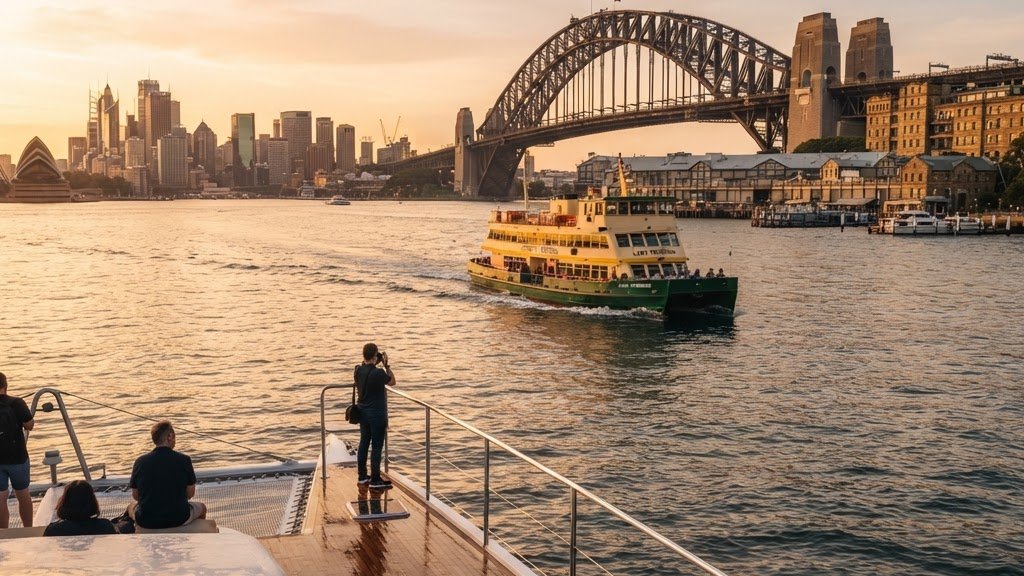
Sydney Harbour history is full of stories that are easy to miss when you only see the harbour from the foreshore. Beneath the famous bridge, opera house and busy ferry routes is a living cultural landscape shaped by First Nations knowledge, exploration, engineering, migration, trade and changing ideas about how the waterfront should be used.
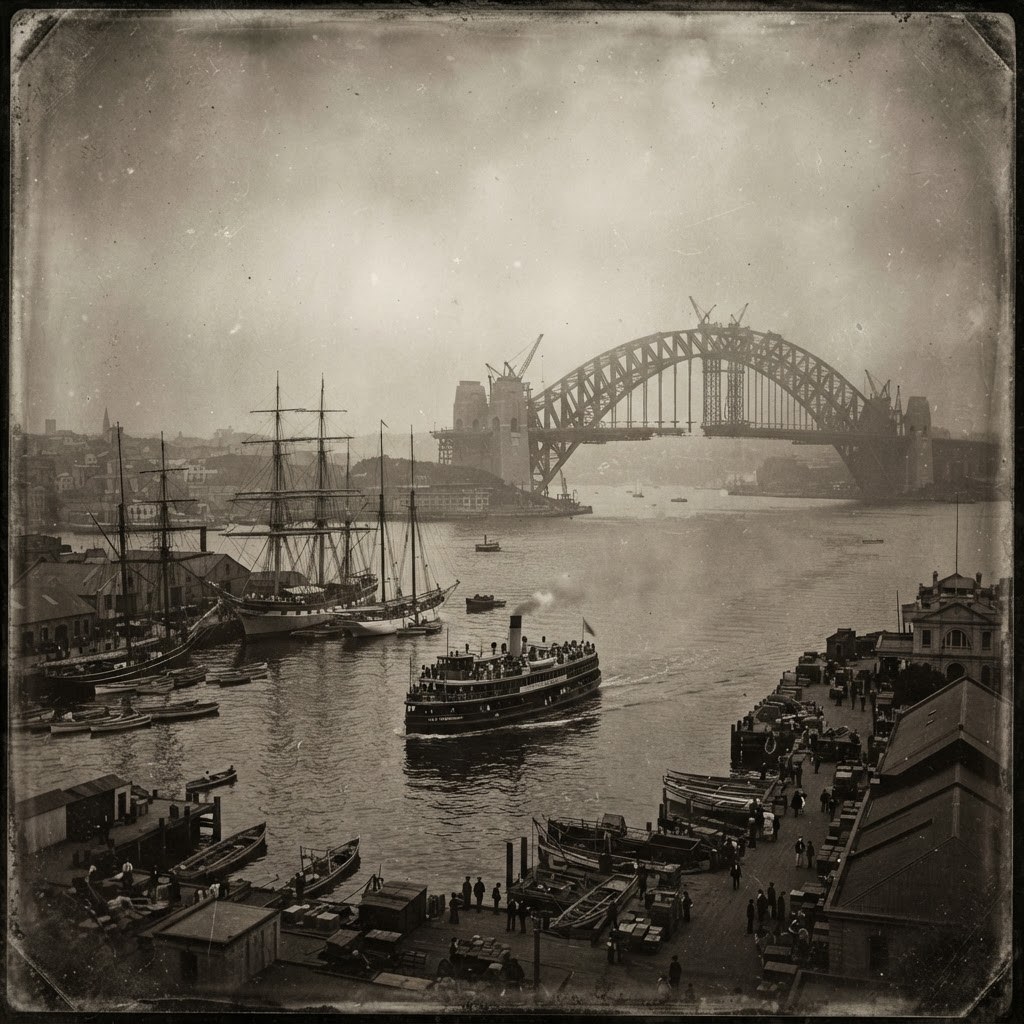
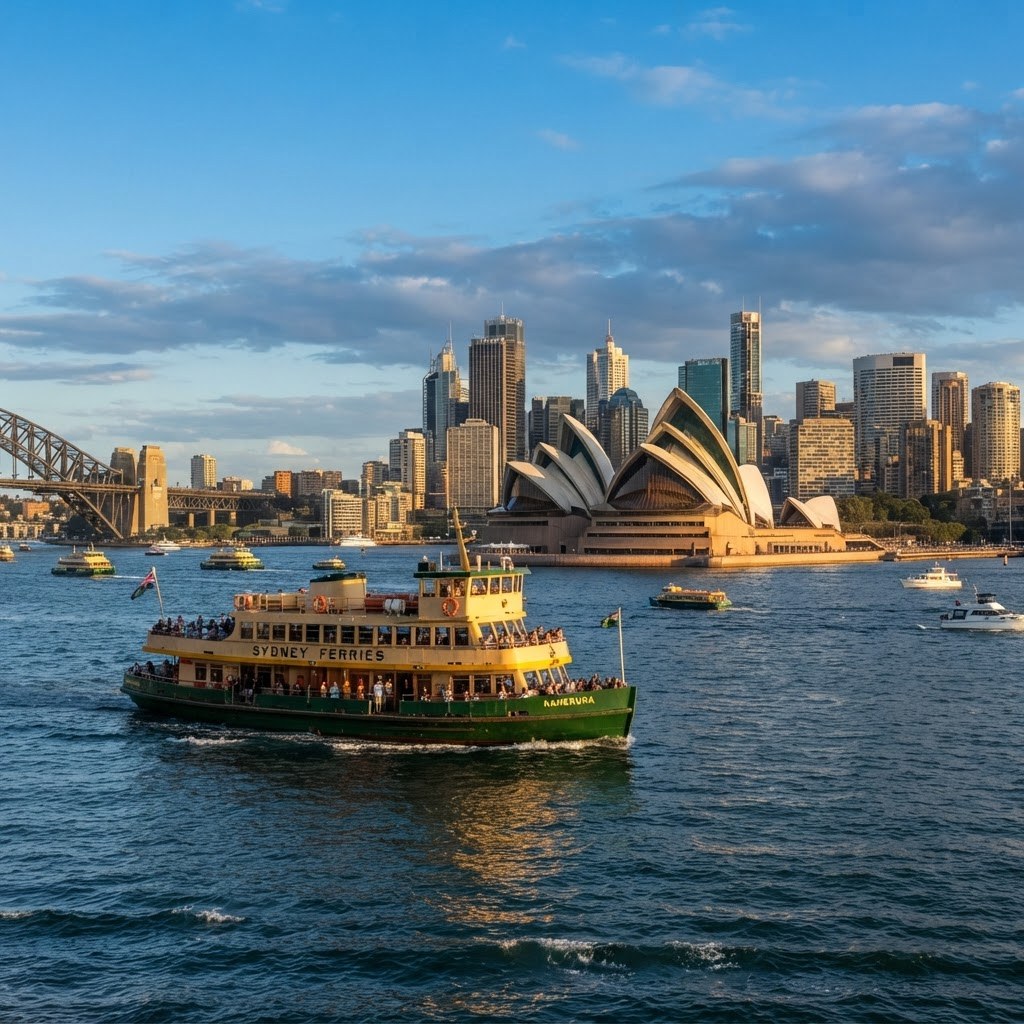
The best way to understand that story is to experience the harbour from the water. A private charter gives you a moving view of the landmarks and lets you connect each place with the people and events that made it significant. Here are ten fascinating facts to look out for on your next Sydney Harbour catamaran charter.
First Fleet Arrives
1788
colony established at Sydney Cove
Harbour Bridge Opens
1932
eight years in the making
Opera House Opens
1973
Utzon’s sails finally raised
1. The harbour has been cared for by First Nations peoples for thousands of years
The waterways now called Sydney Harbour are part of the traditional lands and waters of the Gadigal people of the Eora Nation. The harbour was a source of food, transport, ceremony and connection long before the arrival of the First Fleet. Shell middens, rock engravings and other sites around the harbour remind us that its history did not begin with European settlement.
When you cruise through the harbour, you are travelling through a cultural landscape rather than simply passing a collection of attractions. Treating that history with respect means acknowledging Country, following local guidance around heritage sites and leaving the waterways clean for the communities and wildlife that depend on them.
2. The name “Sydney” came after the harbour had already been mapped
In 1770, Lieutenant James Cook charted the east coast of Australia but did not enter the harbour. In 1788, Captain Arthur Phillip led the First Fleet into the harbour and established the colony at Sydney Cove. Phillip initially called the waterway Port Jackson, a name that remains the harbour's formal geographic name, while the settlement was named Sydney after Thomas Townshend, Lord Sydney.
That distinction is why you may see both “Port Jackson” and “Sydney Harbour” used in maps, historical records and official descriptions. They refer to the same extraordinary natural harbour.
3. Sydney Harbour is one of the world's largest natural harbours
Port Jackson covers a huge network of bays, coves, inlets and waterways, extending well beyond the central view between Circular Quay and the Harbour Bridge. Its deep, sheltered waters made it valuable for shipping and settlement, while its many headlands created the recognisable scenery visitors associate with Sydney.
A boat charter reveals how different the harbour looks from each angle. The Opera House changes shape as you pass it, headlands open into hidden coves, and the city skyline gives way surprisingly quickly to parks, beaches and bushland.
4. The Sydney Harbour Bridge took eight years to build
Construction of the Sydney Harbour Bridge began in 1924 and the bridge officially opened in March 1932. The steel arch became an engineering landmark, linking the northern and southern shores and transforming how people moved around the city. At the time, it was one of the biggest single-arch bridges in the world.
From the water, you can appreciate the bridge's scale in a way that is difficult from a car or train. Look up at the arch, then out towards the harbour approaches to see how carefully the structure was positioned within the landscape. A charter that passes under the bridge offers one of the clearest perspectives.
5. The Opera House was designed by a young Danish architect
Jørn Utzon won the international competition to design the Sydney Opera House in 1957. His sculptural roof “sails” were inspired by the geometry of spheres, and the building's design pushed engineering and construction techniques in new directions. The Opera House opened in 1973, sixteen years after Utzon's competition win.
Its tiled shells are especially impressive from the water, where the building is seen as a complete composition rather than a façade viewed from one side. For photographers, the changing light around sunrise, sunset and the golden hour can make the roof appear almost to change colour.
6. Fort Denison was once a prison site
The small island in the harbour known as Fort Denison has had several lives. Before it was fortified, it was used as a place of punishment, including a “pinchgut” settlement for convicts. The island was later expanded and fortified, with its Martello tower completed in the nineteenth century.
Today, Fort Denison is a distinctive navigation point near the centre of the harbour. Seeing it from a charter helps explain its defensive position and the way vessels move through the surrounding channels.
7. Garden Island is connected to the city by a naval history
Garden Island has been associated with Australia's naval operations since the early colonial period and remains an important maritime precinct. The island was connected to the mainland by a land reclamation project, creating a larger working waterfront while preserving much of its strategic value.
Its cranes, wharves and naval facilities are a reminder that Sydney Harbour is not only a tourism destination. It is still a working harbour, supporting ferries, commercial vessels, defence operations, marine businesses and local communities every day.
8. The harbour has beaches you cannot properly appreciate from land
Many of Sydney Harbour's best-known beaches sit inside sheltered bays, including places around the lower North Shore, Middle Harbour and the eastern foreshore. Their calm water and bushland settings can feel far removed from the city, even when the skyline is visible in the distance.
Some beaches and coves are easiest to understand from a boat because the shoreline, headland and water access are all part of the experience. If your group wants time to swim, relax or explore, ask about a charter itinerary that includes a suitable anchorage and bring reef-safe sunscreen, water and a towel.
9. The harbour has always been a place for celebration
From public ceremonies and sailing events to fireworks and major cultural festivals, Sydney Harbour has long been the city's natural stage. New Year's Eve is the most famous example, but the water is also central to regattas, maritime celebrations and community events throughout the year.
A private boat makes a celebration feel more personal. You can plan your own food, music and timing, with BYO drinks and no corkage available on many Experience Sydney Harbour charters. For larger groups and special occasions, compare the vessels on the catamaran hire page or explore Alila, the hero vessel in the fleet.
10. The best view of harbour history is still from the water
Landmarks can tell you where an event happened, but the water shows you how the harbour works as a whole. From a charter, you can see the relationship between the coves, bridges, headlands, islands and working wharves. You can also move between famous sights without losing the relaxed pace that makes a harbour day memorable.
For a sightseeing-focused day, ask your skipper to include the Harbour Bridge, Opera House, Fort Denison, Shark Island, Garden Island and selected bays where conditions allow. For a celebration, combine the sightseeing with time at anchor, swimming, food and music. Experience Sydney Harbour can help match the itinerary and vessel to your group.
Plan a Sydney Harbour history tour by boat
Sydney Harbour history is best experienced as a connected story: ancient Country, a natural port, a growing city, a working waterway and a place where people still gather. A private charter lets you see the famous landmarks while discovering quieter details along the shoreline.
Ready to explore? Browse the Sydney Harbour catamaran options, view Alila's detailed rates, or contact Experience Sydney Harbour to plan an itinerary for your group.
ALILA — Seawind 1160 Catamaran
The best way to read the harbour’s history is from its water. ALILA takes up to 30 guests past Fort Denison, under the Bridge and around Garden Island with BYO drinks and a professional skipper who knows every chapter of the story.
View ALILA Details & Enquire →Pick Your Route
Circular Quay, Fort Denison, the Harbour Bridge and Garden Island cover the harbour’s biggest chapters in one loop.
Choose Your Vessel
ALILA, the Seawind 1160 flagship, gives your group 360-degree views and a stable platform for sightseeing.
Set the Pace
Most groups book 4-5 hours — long enough to connect the landmarks without rushing between them.
Add a Swim Stop
Anchor in a sheltered bay to experience the hidden beaches and bushland the harbour has hidden for centuries.
Historic landmarks to spot from the water
- Sydney Harbour Bridge — cross beneath the 1932 steel arch
- Sydney Opera House — Utzon’s sails from sail-level
- Fort Denison — the harbour’s Martello tower island
- Garden Island — working naval precinct since colonial times
- Shark Island and the harbour’s sheltered island coves
- Walsh Bay — heritage finger wharves from the working-harbour era
Experience Sydney Harbour tip: The best way to take in the harbour's history is from the water. A charter past Fort Denison, under the Harbour Bridge and around the historic wharves at Circular Quay covers more than 200 years of living history in a few hours — most groups book 4-5 hours to see it all.
Ready to See Sydney Harbour's History From the Water?
Explore the harbour aboard your own private catamaran — with ALILA, our flagship 38ft Seawind 1160, you get 360-degree views of every historic landmark.
View Catamaran Hire Options →Frequently Asked Questions
Why is Sydney Harbour historically significant?
Sydney Harbour is one of the world's great natural harbours, with around 240 kilometres of shoreline and deep, sheltered anchorages. It has been a centre of Aboriginal life for tens of thousands of years, the site of the first European settlement in Australia in 1788, and has served continuously as Sydney's working port, playground and greatest landmark ever since.
What is the Aboriginal history of Sydney Harbour?
The harbour is the traditional home of the Eora nation, including the Gadigal people of the southern shore, who knew the waterway as Warrane. The harbour sustained fishing, shellfish gathering and ceremony for millennia — shell middens around the foreshores are among the oldest evidence of continuous habitation anywhere in Australia.
When was the Sydney Harbour Bridge built?
Construction of the Sydney Harbour Bridge took eight years and the arch bridge officially opened on 19 March 1932. Nicknamed the "Iron Lung" for the jobs it created during the Depression, it employed around 1,400 workers at its peak and remains the widest long-span steel arch bridge in the world.
What happened in Sydney Harbour during World War II?
In late May and early June 1942, three Japanese midget submarines entered Sydney Harbour. One torpedo passed beneath a ferry and sank HMAS Kuttabul at its moorings, killing 21 sailors — the attack is commemorated at the Royal Australian Navy base at Garden Island.
How did Sydney Harbour become famous for New Year's Eve?
What began as modest fireworks displays in the 1980s grew into one of the largest New Year's Eve celebrations on the planet. Today more than a million people line the foreshores and thousands of boats anchor on the harbour itself for the 9pm family fireworks and the world-famous midnight display over the Bridge.
Can you experience Sydney Harbour's history by boat today?
Absolutely. A private charter is one of the best ways to see the harbour's historic sites — Fort Denison, Garden Island, the sandstone wharves of Walsh Bay and the colonial fortifications at South Head — the way Sydneysiders have used the harbour for generations. Current rates and availability should be confirmed when enquiring.
Ready to Book Your Sydney Harbour Charter?
Browse our fleet and send us your date. We'll confirm availability within 24 hours.
Enquire Now Browse BoatsMore Tips & Guides
Best Catamaran Hire Sydney: Prices, Boats & Inclusions
Every operator in Sydney will tell you they offer the best catamaran hire. The claim…
The Perfect Bucks Party Itinerary: 5 Hours on Sydney Harbour
A great bucks day lives or dies on the run sheet. Show up with no…
Catamaran Hire Sydney: Frequently Asked Questions (2026)
Booking a catamaran sounds simple until the questions start stacking up. How much does it…
How to Choose the Best Birthday Boat Hire in Sydney
Every Sydney birthday eventually confronts the same question: what do we actually do this year?…
How to Choose the Best Hens Party Catamaran Hire in Sydney
Choosing a hens party venue in Sydney is a confidence trick played by every function…
Top 10 Bucks Party Boat Ideas on Sydney Harbour
A bucks party has one job: send the groom off with a day his mates…
How to Choose the Best Corporate Boat Hire in Sydney
Booking the wrong corporate venue is a quiet kind of expensive. It looks fine on…
Top 10 Christmas Party Boat Ideas on Sydney Harbour
Sydney in December does not do roaring fireplaces and mulled wine. It does long golden…